
Kashmir: Details of the Shopian and Sopore Encounters
On 4 August 2018 Security Forces killed 5 militants in an encounter in the Shopian district of J&K. Umar a Malik an Lakshar-e-Taiba
commander was killed in the operation. L-e-TMilitant Naveed Jatt appeared at his funeral to pay a gun salute. the previous day on 3
August 2018 two militants were killed. One of them was a B-tech student.
Story By Kamran Yousuf and Pratik Purkayasth
Indian army kills Kashmir students (why?)
why India target in Kashmires common lakes of people are killed by India army in Kashmir
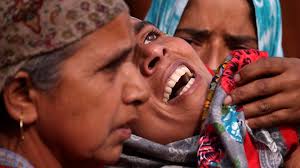
Protests broke out in parts of Indian-administered Kashmir after police said a student was killed by the army. Protesters demanded a criminal investigation against soldiers involved in killing the teenage victim, Shahid Bashir Munir. Security forces accused the young man of being a rebel gunman, but police admitted the 19-year-old was an unarmed civilian. Al Jazeera’s Priyanka Gupta reports.
India cannot stand media neutrality on disputes Kashmir border
India
Politics and Security
The Economist
In May 2011, the Indian customs forced The Economist to doctor 28,000 copies of its 21 May issue before permitting its distribution.
Download forbidden content
Ever since the partition of India and Pakistan in 1947 and the proclamation of the People’s Republic of China in 1949, Kashmir’s border has been both a cause and symptom of the tension between India and its Pakistani and Chinese neighbors. Ever since the partition of India and Pakistan in 1947 and the proclamation of the People’s Republic of China in 1949, Kashmir’s border has been both a cause and symptom of the tension between India and its Pakistani and Chinese neighbors.
The Indian government often uses a 1961 law amending the criminal code’s national security provisions to censor maps showing Kashmir’s disputed border. It has usually settled for putting a “not recognized by India” sticker on the maps, but in recent years it has toughened its information control policies, going so far as to block the import and distribution of copies of the Financial Times and The Economist in December 2010 because they contained maps of Asia that were “not consistent” with the government’s position.
"We Fight Censorship" is reprinting the censored map with the kind permission of The Economist.
Anticipating the censorship of the regional map in its 21 May 2011 issue, The Economist added a box entitled “Missing map?” at the end of the report. The box said:
Sadly India censors maps that show the current effective border, insisting instead that only its full territorial claims be shown. It is more intolerant on this issue than either China or Pakistan. Indian readers will probably be deprived of the map on the second page of this special report. Unlike their government, we think our Indian readers can face political reality. Those who want to see an accurate depiction of the various territorial claims can do so using our interactive map at Economist.com/asianborders
Territorial disputes continue to be a highly sensitive subject for India’s government. When the Chinese foreign ministry issued new passports in November 2012 with a map of China on pages 8 and 46 showing territories claimed by Vietnam, Taiwan, Philippines, and India as Chinese, all of these countries protested but India was the only one to respond by producing new visas for Chinese citizens with the map of India that showed its version of the Sino-Indian border dispute.
source: international media research by -look2how-oike

ACCOUDING TO WIKIPEDIA AND INDIA GOVERNMENT
The Kashmiris (Kashmiri: کٲشِر لوٗکھ / कॉशुर लूख) are an ethnic group native to the Kashmir Valley, in the Indian union territory of Jammu and Kashmir, who speak Kashmiri, an Indo-Aryan Dardic language.[4] The bulk of Kashmiri people predominantly live in the Kashmir Valley–which is the 'actual' Kashmir and does not include the other territories of the former princely state of Jammu and Kashmir (i.e. Jammu, Gilgit-Baltistan, Azad Kashmir and Ladakh).[A] Other ethnic groups living in the former Jammu and Kashmir state include Gujjars,[5] Dogras,[6] Paharis, Baltis and Ladakhis.[7][8]
While Kashmiris are native to the Kashmir Valley, smaller populations of Kashmiris also live in the remaining districts of Jammu and Kashmir. Ethnic Kashmiris can be found in the Chenab region's Doda, Ramban, Reasi and Kishtwar districts and in the Neelam Valley and Leepa Valley of northern Azad Kashmir. Since 1947, many ethnic Kashmiris are also found in Pakistan.[9] Many ethnic Kashmiris from the Kashmir Valley migrated to the Punjab region during the Dogra, Sikh and Afghan rule of Kashmir.[10][11][12][13] Most Kashmiris today are Sunni Muslim[14] but a sizeable Hindu community also exists. Most ethnic Kashmiri Muslims are descended from Kashmiri Hindu Pandits and Buddhists,[15] some also use the prefix 'Sheikh'.[16][17][18] Common surnames among these people include Bhat/Butt, Dar, Lone, Malik etc.[19][20][21]
Although all residents of Azad Kashmir call themselves 'Kashmiri', most residents of Azad Kashmir are not ethnic Kashmiris.[22]

Young Kashmiris want Indian forces to leave:valley
Survey appears to challenge India's claim that revocation of Kashmir's autonomy will resolve decades-old conflict.
Many who would like to see the region remain independent of both
nations believe that the plebiscite, in its current form, might not
adequately address popular aspirations.
In 1953, India's first Prime Minister Jawaharlal Nehru promised to conduct a plebiscite in Kashmir to resolve the conflict, but it was never implemented.
"Other than being an inherent right, Kashmiri nationalism has a history older than both Indian and Pakistani nation-states," Haroon Rashid, a research scholar based in India, told Al Jazeera. "A Kashmir, free of both the nations, will cease to be a nuclear flashpoint in South Asia," he added.
On the question of seeking Pakistan's support in the potential resolution of the conflict, 64 percent participants responded positively, while 79 percent said they would like Western mediators to consider Kashmiris a central party in any negotiations.
Given the restrictions and level of repression that exists in Indian-administered Kashmir, it is hard to gauge the extent to which Kashmiris are pro-Pakistan or purely nationalist
But Professor Sreeram Chaulia, dean of Jindal School of Global Affairs, said it was "too soon" to gauge the opinion of Kashmiris on the effects of Indian move in Kashmir.
"It has only been seven months since the revocation of autonomy, and we will, at least, have to wait for five to 10 years to survey the nature of popular perceptions regarding this move," he told Al Jazeera.
When asked about the representative nature of the survey, Biberman maintained that she found it characteristic of the opinion within the university and college students of Kashmir.
The survey was conducted in Srinagar, the main city in Kashmir. The current number of university and college students is not available, but it is estimated to run into thousands.
Chaulia said the sample size of nearly 600 students out of a population of seven million was not representative. He did not elaborate.
Biberman defended the research methodology. "Our methods successfully went through an IRB [Institutional Review Board] process at Skidmore College," she told Al Jazeera. The IRB reviews all research involving human subjects and includes ethical, institutional, legal, scientific and social implications of a research project.


In 1953, India's first Prime Minister Jawaharlal Nehru promised to conduct a plebiscite in Kashmir to resolve the conflict, but it was never implemented.
"Other than being an inherent right, Kashmiri nationalism has a history older than both Indian and Pakistani nation-states," Haroon Rashid, a research scholar based in India, told Al Jazeera. "A Kashmir, free of both the nations, will cease to be a nuclear flashpoint in South Asia," he added.
On the question of seeking Pakistan's support in the potential resolution of the conflict, 64 percent participants responded positively, while 79 percent said they would like Western mediators to consider Kashmiris a central party in any negotiations.
Given the restrictions and level of repression that exists in Indian-administered Kashmir, it is hard to gauge the extent to which Kashmiris are pro-Pakistan or purely nationalist
But Professor Sreeram Chaulia, dean of Jindal School of Global Affairs, said it was "too soon" to gauge the opinion of Kashmiris on the effects of Indian move in Kashmir.
"It has only been seven months since the revocation of autonomy, and we will, at least, have to wait for five to 10 years to survey the nature of popular perceptions regarding this move," he told Al Jazeera.
When asked about the representative nature of the survey, Biberman maintained that she found it characteristic of the opinion within the university and college students of Kashmir.
The survey was conducted in Srinagar, the main city in Kashmir. The current number of university and college students is not available, but it is estimated to run into thousands.
Chaulia said the sample size of nearly 600 students out of a population of seven million was not representative. He did not elaborate.
Biberman defended the research methodology. "Our methods successfully went through an IRB [Institutional Review Board] process at Skidmore College," she told Al Jazeera. The IRB reviews all research involving human subjects and includes ethical, institutional, legal, scientific and social implications of a research project.
SOURCE: Al Jazeera News
SOURCE:BBC NEWS
SOURCE: KASHMIR PEOPLES with: KASHMIRBLOOD ;;;LOOK2HOW AND OTHER WEBSITES
THE FAMOUS VIEW IN KASHMIR BABA SHAKUR DINE
Baba shakur dine famous shrine in sopore and it is located on a
mountain, from baba shakur din you can see the shrine of Baba rishi
sahib also.
from this shrine you can have a view of wular lake and that view is just
awesome. I have climbed this shrine many times, one can go in a private
car and also by climbing.
i with my frind used to come from sopore on bicycle and then climb this
mountain of baba shakrudin.


