
ACCOUDING TO WIKIPEDIA AND INDIA GOVERNMENT
The Kashmiris (Kashmiri: کٲشِر لوٗکھ / कॉशुर लूख) are an ethnic group native to the Kashmir Valley, in the Indian union territory of Jammu and Kashmir, who speak Kashmiri, an Indo-Aryan Dardic language.[4] The bulk of Kashmiri people predominantly live in the Kashmir Valley–which is the 'actual' Kashmir and does not include the other territories of the former princely state of Jammu and Kashmir (i.e. Jammu, Gilgit-Baltistan, Azad Kashmir and Ladakh).[A] Other ethnic groups living in the former Jammu and Kashmir state include Gujjars,[5] Dogras,[6] Paharis, Baltis and Ladakhis.[7][8]
While Kashmiris are native to the Kashmir Valley, smaller populations of Kashmiris also live in the remaining districts of Jammu and Kashmir. Ethnic Kashmiris can be found in the Chenab region's Doda, Ramban, Reasi and Kishtwar districts and in the Neelam Valley and Leepa Valley of northern Azad Kashmir. Since 1947, many ethnic Kashmiris are also found in Pakistan.[9] Many ethnic Kashmiris from the Kashmir Valley migrated to the Punjab region during the Dogra, Sikh and Afghan rule of Kashmir.[10][11][12][13] Most Kashmiris today are Sunni Muslim[14] but a sizeable Hindu community also exists. Most ethnic Kashmiri Muslims are descended from Kashmiri Hindu Pandits and Buddhists,[15] some also use the prefix 'Sheikh'.[16][17][18] Common surnames among these people include Bhat/Butt, Dar, Lone, Malik etc.[19][20][21]
Although all residents of Azad Kashmir call themselves 'Kashmiri', most residents of Azad Kashmir are not ethnic Kashmiris.[22]

Young Kashmiris want Indian forces to leave:valley
Survey appears to challenge India's claim that revocation of Kashmir's autonomy will resolve decades-old conflict.
Many who would like to see the region remain independent of both
nations believe that the plebiscite, in its current form, might not
adequately address popular aspirations.
In 1953, India's first Prime Minister Jawaharlal Nehru promised to conduct a plebiscite in Kashmir to resolve the conflict, but it was never implemented.
"Other than being an inherent right, Kashmiri nationalism has a history older than both Indian and Pakistani nation-states," Haroon Rashid, a research scholar based in India, told Al Jazeera. "A Kashmir, free of both the nations, will cease to be a nuclear flashpoint in South Asia," he added.
On the question of seeking Pakistan's support in the potential resolution of the conflict, 64 percent participants responded positively, while 79 percent said they would like Western mediators to consider Kashmiris a central party in any negotiations.
Given the restrictions and level of repression that exists in Indian-administered Kashmir, it is hard to gauge the extent to which Kashmiris are pro-Pakistan or purely nationalist
But Professor Sreeram Chaulia, dean of Jindal School of Global Affairs, said it was "too soon" to gauge the opinion of Kashmiris on the effects of Indian move in Kashmir.
"It has only been seven months since the revocation of autonomy, and we will, at least, have to wait for five to 10 years to survey the nature of popular perceptions regarding this move," he told Al Jazeera.
When asked about the representative nature of the survey, Biberman maintained that she found it characteristic of the opinion within the university and college students of Kashmir.
The survey was conducted in Srinagar, the main city in Kashmir. The current number of university and college students is not available, but it is estimated to run into thousands.
Chaulia said the sample size of nearly 600 students out of a population of seven million was not representative. He did not elaborate.
Biberman defended the research methodology. "Our methods successfully went through an IRB [Institutional Review Board] process at Skidmore College," she told Al Jazeera. The IRB reviews all research involving human subjects and includes ethical, institutional, legal, scientific and social implications of a research project.

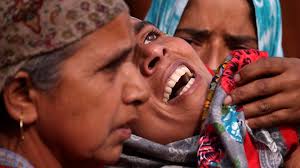

In 1953, India's first Prime Minister Jawaharlal Nehru promised to conduct a plebiscite in Kashmir to resolve the conflict, but it was never implemented.
"Other than being an inherent right, Kashmiri nationalism has a history older than both Indian and Pakistani nation-states," Haroon Rashid, a research scholar based in India, told Al Jazeera. "A Kashmir, free of both the nations, will cease to be a nuclear flashpoint in South Asia," he added.
On the question of seeking Pakistan's support in the potential resolution of the conflict, 64 percent participants responded positively, while 79 percent said they would like Western mediators to consider Kashmiris a central party in any negotiations.
Given the restrictions and level of repression that exists in Indian-administered Kashmir, it is hard to gauge the extent to which Kashmiris are pro-Pakistan or purely nationalist
But Professor Sreeram Chaulia, dean of Jindal School of Global Affairs, said it was "too soon" to gauge the opinion of Kashmiris on the effects of Indian move in Kashmir.
"It has only been seven months since the revocation of autonomy, and we will, at least, have to wait for five to 10 years to survey the nature of popular perceptions regarding this move," he told Al Jazeera.
When asked about the representative nature of the survey, Biberman maintained that she found it characteristic of the opinion within the university and college students of Kashmir.
The survey was conducted in Srinagar, the main city in Kashmir. The current number of university and college students is not available, but it is estimated to run into thousands.
Chaulia said the sample size of nearly 600 students out of a population of seven million was not representative. He did not elaborate.
Biberman defended the research methodology. "Our methods successfully went through an IRB [Institutional Review Board] process at Skidmore College," she told Al Jazeera. The IRB reviews all research involving human subjects and includes ethical, institutional, legal, scientific and social implications of a research project.
SOURCE: Al Jazeera News
SOURCE:BBC NEWS
SOURCE: KASHMIR PEOPLES with: KASHMIRBLOOD ;;;LOOK2HOW AND OTHER WEBSITES

0 comments